Brains Have GPS (04-24-13)
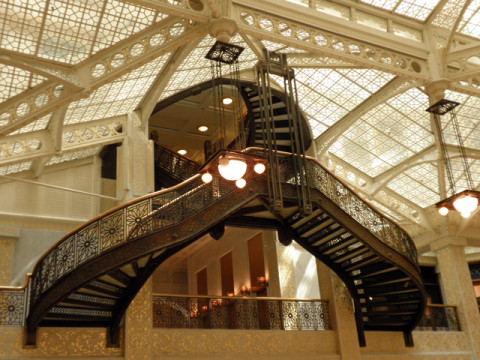
Research at Johns Hopkins Medical School indicates that our brains come complete with global positioning systems (GPS); these findings make it clearer why Alzheimer’s disease and age-related cognitive decline make it hard for some people to find their way through designed environments. The Johns Hopkins team “found that as a rat travels randomly through the box without knowing where it needs to go, different combinations of place cells fire at each location along its path. The same set of cells fires every time the rat travels the same spot.
Visual Clutter and Cognitive Impairment (10-03-12)
A study by researchers from Georgia Tech and the University of Toronto indicates that people with mild cognitive impairment (MCI), often seen as a precursor to Alxheimer’s disease, may benefit from a less visually complex environment.
- Blogs 2012
- Blog Article
- Any Designed Environment
- Enhance Satisfaction/Quality of Life
- Increase Productivity/Performance
- Visual Information
- Visual Quality and Visual Diversity
- Alzheimer's/Dementia
- Framework for Reaction to Place
- Gerontologic Issues
- architecture psychology
- design psychology
- design research
- design science
- environment behavior
- environmental psychology
- interior design psychology
- place advantage
- place science
- sensory science
The Design of Caring Facilities
Healthcare environments—long-term-care homes, therapist offices, children's waiting rooms, labor and delivery rooms, neo-natal units, and new hospitals—continue to be carefully researched.
Designing for Dementia (02-19-10)
Simpson reviews research related to the design of environments for people with dementia, particularly elderly dementia sufferers.
- Blogs 2010
- Blog Article
- Any Designed Environment
- Ease Wayfinding
- Enhance Satisfaction/Quality of Life
- Increase Physical Activity
- Promote Physical Health/Improve Health Outcomes
- Promote Social Behavior/Support Diversity
- Support Mental Restoration/Ease Stress
- Alzheimer's/Dementia
- Useful Design Principles
- architecture psychology
- design psychology
- design research
- design science
- environment behavior
- environmental psychology
- interior design psychology
- place advantage
- place science
- sensory science
Lemon Scent Reduces Agitation
Researchers at Newcastle General Hospital have determined that lotions containing an essential oil from lemon balm may help reduce agitation and improve quality of life for dementia patients.
Supportive Spaces for Alzheimer’s Patients (01-08-09)
Zeisel has extensively researched the social and physical environments in which Alzheimer’s patients should live.
Bright Lights Reduce Dementia Symptoms (6-12-08)
When the circadian rhythms of demented elderly people are disrupted there can be serious ramifications.
Bright Ambient Light and Dementia
Being exposed to bright light at specific points during the day increases the length of time that people with dementia remain asleep at night.
Gardening and Exercise: Healthy Aging for Older Adults
More often than not, the outdoor environment of a senior ‘retirement’ community is ignored and people focus on the attributes of a building's interior. However, the activities that can be offered on the outside of a building are almost limitless, constrained only by the imagination, and not by a person's age.
- 2007 - Issue 4
- Expert's Corner
- Garden
- Long Term Living Facility
- Enhance Satisfaction/Quality of Life
- Increase Physical Activity
- Optimize Learning Outcomes
- Promote Physical Health/Improve Health Outcomes
- Promote Social Behavior/Support Diversity
- Senses
- Alzheimer's/Dementia
- Gerontologic Issues
- Landscape Architecture
Exchange between Lighting Scientists and Designers
There is a wealth of new information on the effects of light on health and implications for practical lighting design.
- 2007 - Issue 2
- Expert's Corner
- Any Designed Environment
- Improve Mood/Increase Feelings of Wellbeing
- Increase Productivity/Performance
- Promote Physical Health/Improve Health Outcomes
- Light
- Alzheimer's/Dementia
- Children's Environments
- Educational Environments
- Health Care Environments
- Leisure Environments
- Lighting
- Other Environments
- Residential Environments
- Retail Environments
- Workplace Environments