If They Can Stand, Will They? (04-26-13)
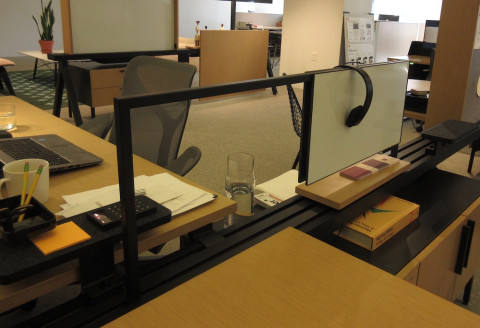
Knowledge workers sit too much. Research has shown that their sedentary habits are bad for their physical and mental well-being – but if workers have the opportunity to stand while working, will they?
- Workplace
- Design Preferences
- Enhance Satisfaction/Quality of Life
- Improve Mood/Increase Feelings of Wellbeing
- Increase Productivity/Performance
- Furniture
- Design Trends
- architecture psychology
- design psychology
- design research
- design science
- environment behavior
- environmental psychology
- interior design psychology
- place advantage
- place science
- sensory science
Arranging Chairs to Persuade (03-28-13)
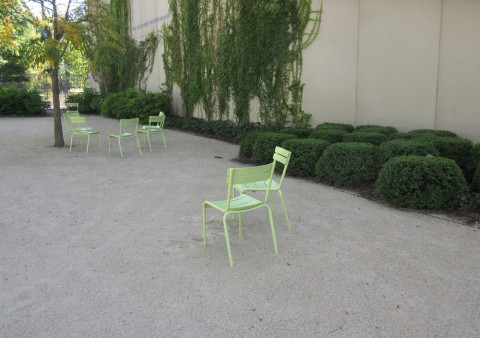
Zhu and Argo have completed a preliminary analysis of the influence of various arrangements of chairs on the best ways to persuade people to take particular actions. Subjects in their study sat in a chair among other chairs all of which were arranged either in a traditional chair circle with all chairs facing inward, in a square with all chairs facing inward or in a chair facing inward that was either beside a row of other chairs facing inward or in a line of chairs perpendicular to another line of chairs, all facing inward. The first seating arrangement was ca
Offices and Evolution (03-22-13)
Fitzgerald and Danner summarize some of the ways that our evolutionary past should influence current office design; a topic that is discussed regularly here (for example, https://researchdesignconnections.com/pub/arguments-biophilic-architecture).
- Workplace
- Increase Productivity/Performance
- Support Mental Restoration/Ease Stress
- Daylight
- Furniture
- Plants
- Windows and Doors
- Framework for Reaction to Place
- architecture psychology
- design psychology
- design research
- design science
- environment behavior
- environmental psychology
- interior design psychology
- place advantage
- place science
- sensory science
Flexible Classroom Design for Writing Classes (02-06-13)
Miller-Cochran and Gierdowski have learned that flexible classroom design cost-effectively supports composition (writing) classes. More specifically, when students are using their own laptop computers during class “in a flexible classroom, which included mobile furnishings, mobile whiteboards, and multiple LCD screens for projection . . . .
Repercussions of Working While Standing (01-15-13)
Recent research has shown that people doing office work need to be able to stand while working, when they choose to do so (for related information, see http://researchdesignconnections.com/pub/why-should-every-work-space-pro...). A new study, conducted by Chourasia and colleagues, indicates that sit-stand desks should not be introduced in a vacuum, without considering potential modifications to other tools used by workers, such as computer software: “Participants . . .
- Workplace
- Enhance Satisfaction/Quality of Life
- Increase Productivity/Performance
- Promote Physical Health/Improve Health Outcomes
- Furniture
- Design Process and Issues
- architecture psychology
- design psychology
- design research
- design science
- environment behavior
- environmental psychology
- interior design psychology
- place advantage
- place science
- sensory science
Star Trek Classrooms (11-30-12)
Researchers at Durham University explored the learning repercussions of multi—touch, multi-user desks. Their findings, derived “from a 3-year project working with over 400 pupils, mostly 8-10 year olds, show that collaborative learning increases both fluency and flexibility in maths. It also shows that using an interactive ‘smart’ desk can have benefits over doing mathematics on paper. Using multi-touch desks in the new classroom, the children were able to work together in new ways to solve and answer questions and problems using inventive solutions.
Designing Schools That Support New Learning Methods
New studies in school design research are particularly applicable as teachers adapt more active forms of learning.
Furniture Arrangements and Activity in Care Homes (09-11-12)
Research in care homes indicates that how furniture is arranged can significantly influence resident activity.
- Blogs 2012
- Blog Article
- Healthcare
- Long Term Living Facility
- Enhance Satisfaction/Quality of Life
- Improve Mood/Increase Feelings of Wellbeing
- Promote Physical Health/Improve Health Outcomes
- Furniture
- Age - For example: Gen X, Gen Y, Baby Boomers
- Gerontologic Issues
- architecture psychology
- design psychology
- design research
- design science
- environment behavior
- environmental psychology
- interior design psychology
- place advantage
- place science
- sensory science
Encouraging Outdoor Recreation and Neighborliness

More research supports the connection between the physical environment and neighborhood social relations, and adds to our understanding about specific features that draw both old and young outdoors.
- 2012 - Issue 3
- Featured Stories
- Outdoor Environment
- Residential Neighborhood/Area
- Increase Physical Activity
- Promote Social Behavior/Support Diversity
- Support Mental Restoration/Ease Stress
- Furniture
- Sidewalk/Path
- Age - For example: Gen X, Gen Y, Baby Boomers
- Landscape Architecture
- Residential Environments
- Urban Design
Eye-Level and Communication
Want to create more dialogue? Put people eye-to-eye.